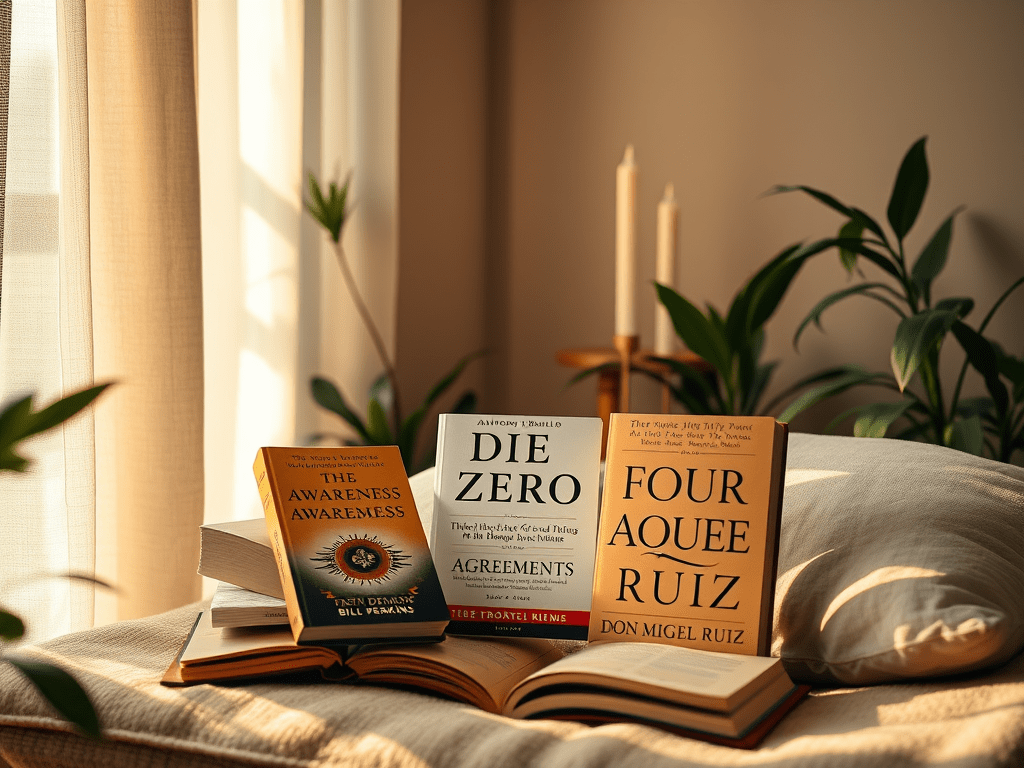
Life has a way of leading us to the exact tools we need, often just when we need them the most. For me, that first tool was Anthony DeMello’s voice book on awareness. Referred by a friend at a particularly challenging time, I had no idea how profoundly it would shape my outlook. This book became the cornerstone of my journey into bibliotherapy—a path of healing and growth through reading that brought clarity, peace, and, ultimately, a new way of seeing the world.
In DeMello’s words, I found a guiding light that pierced through my emotional fog. His teachings centered on the beauty of awareness: of being fully present, of witnessing life without judgment, of freeing ourselves from the chains of societal expectations and ingrained beliefs. He offered me permission to observe rather than react, to let go rather than cling. This practice of awareness taught me that my thoughts weren’t my identity; they were clouds passing through the sky of my mind. I could see them, acknowledge them, but I didn’t have to hold onto them. The book didn’t solve every problem, but it opened a door to inner peace that felt sustainable—an approach to life that resonated deeply with me.
The next book in my bibliotherapy journey, Die With Zero, carried a more tangible message: live fully, now. Its author, Bill Perkins, challenges our traditional view of wealth and time, suggesting that we should aim to “die with zero”—to use our time, money, and energy to create meaningful experiences throughout our lives. I realized I was sometimes too focused on “saving for the future,” mentally preparing for some distant fulfillment rather than living in the richness of the moment. This book made me question how I defined value, not just in terms of money but in terms of memories and relationships. By shifting my focus, I began to understand that fulfillment doesn’t always come from future stability but from present joy.
Then came The Four Agreements by Don Miguel Ruiz, which spoke to me in a more personal way. Ruiz lays out four simple yet powerful principles for living authentically: be impeccable with your word, don’t take anything personally, don’t make assumptions, and always do your best. Each of these agreements took hold in my life with a different force, reshaping my interactions and my self-perception. The second agreement, “don’t take anything personally,” was particularly transformative. How many times had I allowed someone else’s behavior or words to impact my mood, my sense of self-worth? This agreement taught me that people’s actions often reflect their own inner battles, not mine.
In essence, these books taught me to cultivate a presence in my life that is less reactive, more open, and deeply appreciative of the present. They grounded me in difficult times, offering practical wisdom when I needed it most. Through bibliotherapy, I found that books are not just stories or lessons; they’re lifelines, and they can offer just what we need to find clarity, strength, and hope.
 Halai
Halai 
Leave a comment