
Savannah, Georgia—a city known for its charm, with beautiful squares, oak-lined streets, and a rich sense of history. When I was in Atlanta, I found myself dreaming of Savannah’s possibilities. Its proximity to the beach, its stunning architecture, and its unique vibe made it feel like a dream destination. Yet, my day spent in the Fulton County government offices brought me an unexpected and sobering perspective.
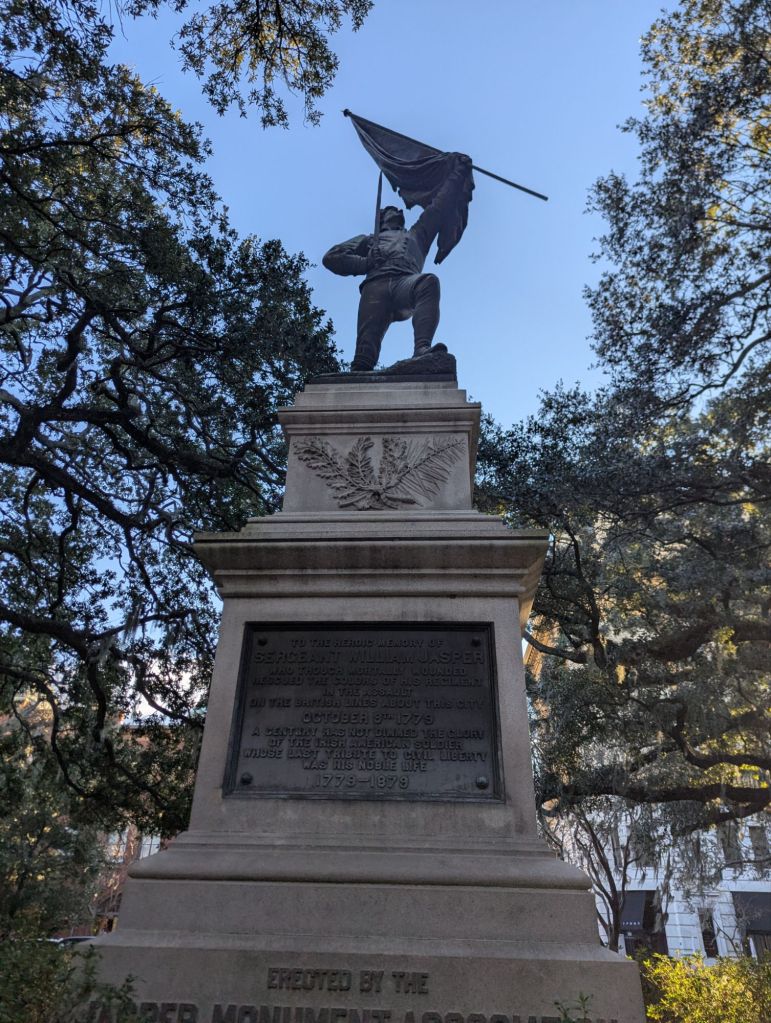
One of the people I spoke to said something that stuck with me: “Savannah is beautiful, yes, but think about the atrocities that happened there.” I couldn’t shake that thought, and as I walked through Savannah’s famed squares—spaces celebrated for their beauty and serenity—I found myself haunted by what these places once stood for.
These squares, now filled with tourists and laughter, were once sites of unimaginable cruelty. They were places where enslaved people were auctioned, where families were torn apart and treated as property. And it wasn’t just the enslaved Africans—long before them, Savannah’s story began with the displacement and suffering of the indigenous peoples who lived there peacefully for generations.
It’s a history that makes you question humanity. What drove people to such greed and violence? Why was it acceptable to strip people of their dignity, to separate families, to rape women, to exploit labor with such brutality? What warped sense of power or profit made these atrocities not just possible but normalized for so long?
The more I read about Savannah’s history, the more I realized how little we openly discuss the weight of this past. These are topics that seem to fade into the background of modern life. The beauty of Savannah is often celebrated, but the blood that was spilled on its soil remains a hushed memory, rarely brought to the forefront. This silence itself feels like a continuation of the injustice—a refusal to acknowledge and confront the truth.
Leaving Atlanta, I’m left with a mix of emotions. Savannah captivated me; a part of my heart remains there. I fell in love with its beauty, its squares, and its charm. But the reality of its history—the atrocities that underpin its foundation—has become an inseparable part of that love.
I think we owe it to Savannah, to those who suffered there, to talk about this history. To think about the indigenous peoples who were forced from their lands, the enslaved Africans who were brutalized and dehumanized, and the greed and cruelty that made it all possible. We owe it to them to remember and to ensure that their stories are not erased by the passage of time or the veneer of tourism.
Savannah’s beauty and darkness coexist, and in acknowledging both, we honor the truth of its identity. My journey may move forward, but I carry the memory of Savannah with me—the good, the bad, and the unspeakable. And I hope, in some small way, to keep the memory of those who suffered alive in the way I think, write, and act. For their story is a part of our collective humanity, and it’s one we must never forget.

 Halai
Halai 
Leave a comment