We’ve been in Tangier, Morocco, for about 10 or 11 days now. We flew into Casablanca, took the bullet train to Tangier, and settled in. It’s been an adventure so far—full of beauty, chaos, and, well… tourist traps.
Our first tourist trap came early on, maybe on the first or second day. We wandered into the Medina, stopping at an art gallery, when one of the kids said they were hungry. The old man at the gallery, very well-spoken in English, quickly jumped in, “Ah yes, come, come, I know a very authentic Moroccan restaurant.”
Authentic, of course.
He led us down the narrow streets to a place where, conveniently, two other Canadians were already sitting with a tourist guide. No menu. Just a few confident suggestions from the owner: “You’ll have the tagine—beef, lamb. And for the kids? Chicken skewers, perfect for them.”
We nodded along. The food arrived, and it was… okay. Mediocre at best. But the bill? A staggering 750 dirhams, and with a “recommended” tip, it came to 800. That’s when it hit us—our first proper tourist trap.
But today, today was the one that really got to me.
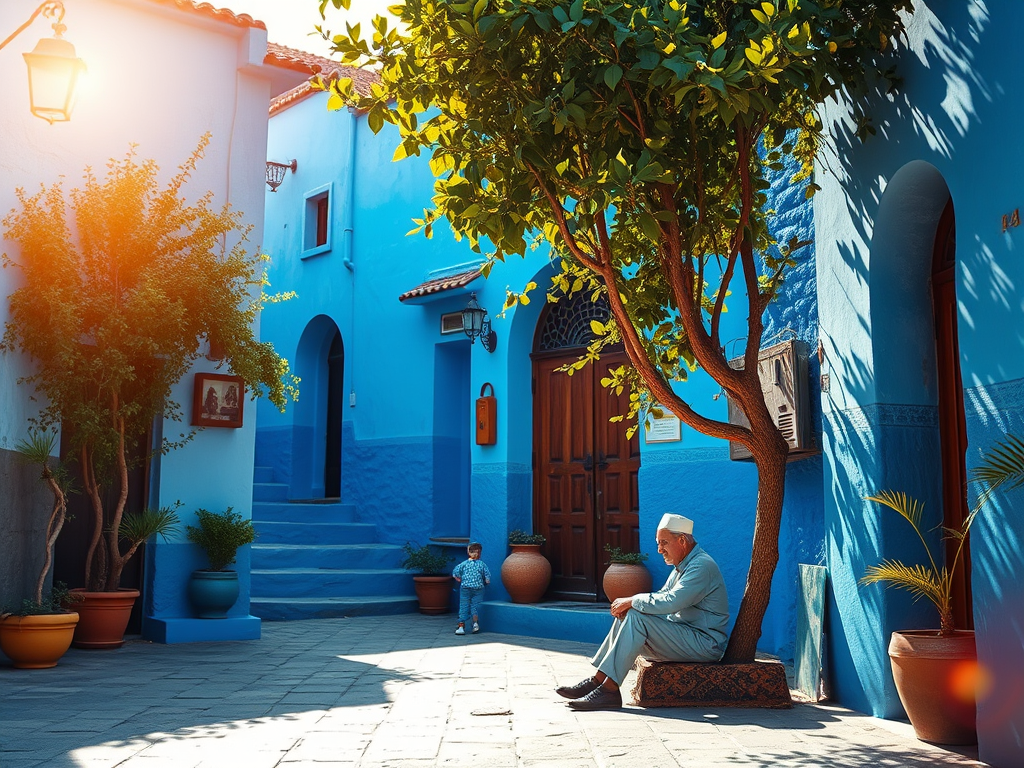
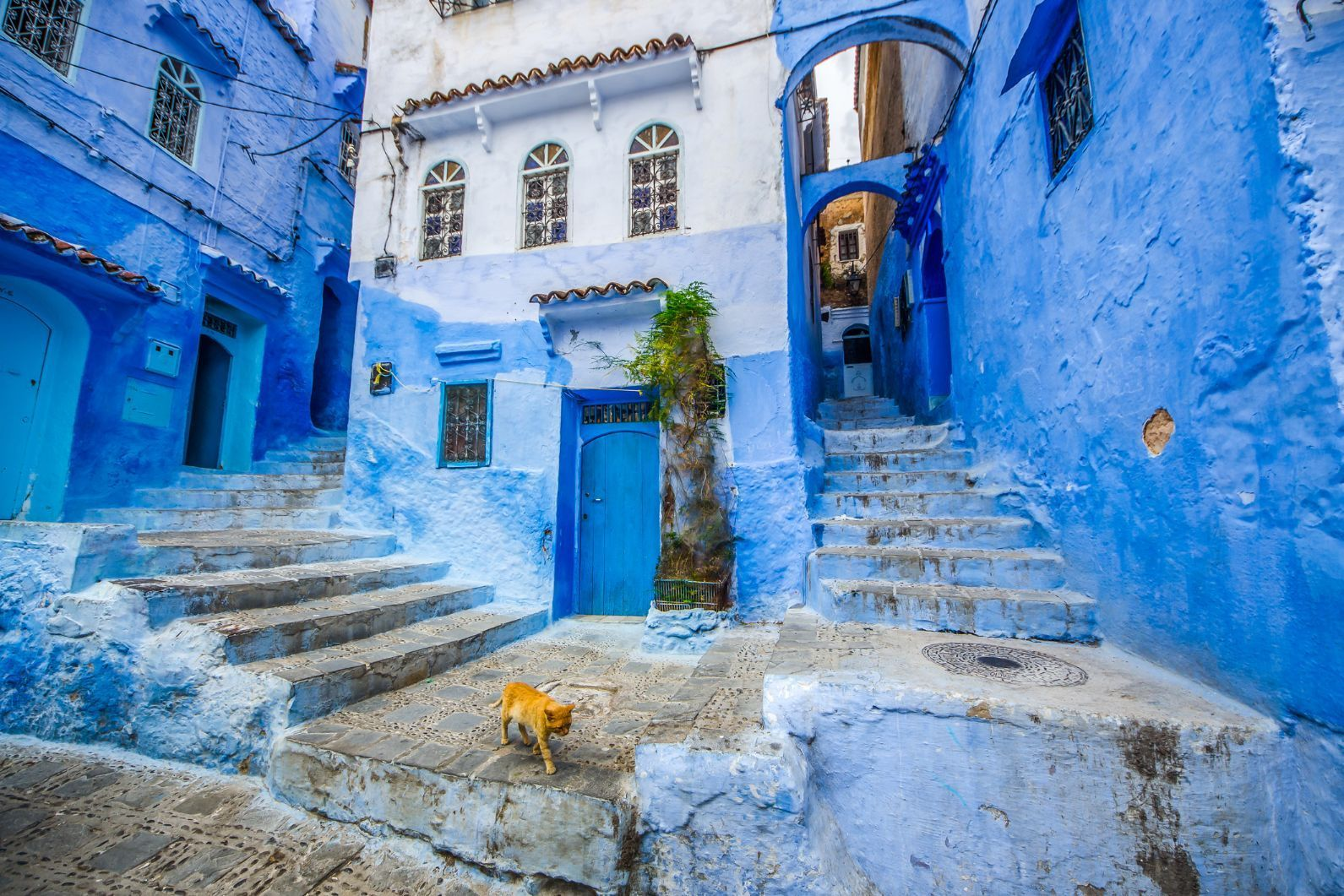
We took a trip to Chefchaouen, the famous blue city, about two hours from Tangier. After strolling through the blue blue Medina, we started a 30-minute climb up towards a small café perched on a hill with a great view. Along the way, I noticed an old man sleeping under a tree. Nothing out of the ordinary.
But on our way down, he was suddenly awake.
“Muslim?” he asked, pointing at me.
“Yes,” I replied.
He gestured for me to sit beside him. Then, in a deep and rhythmic voice, he began reciting Ayatul Kursi. And I listened. Because Ayatul Kursi is my weakness.
It’s something I’ve learned and forgotten and relearned again, a personal struggle to keep it in my memory. Last Ramadan, I made a conscious effort to cement it, knowing that the Sunni version is shorter than the Dawoodi Bohra one I grew up with. And here was this man, a stranger, reciting it beautifully, out of nowhere, in the middle of a blue city on a hillside.
For a brief moment, I thought—maybe this is a sign from God.
Then, he turned to my family and started speaking in Arabic, saying things like, “You will be in Jannat.” I knew what was coming next. The universal signal for money.
I pulled out a 5-dirham coin and placed it in his hand.
He threw it against the wall.
I walked away, a little stunned. Later, my daughter told me he did pick up the coin. But that moment, that rejection of the money before ultimately taking it, felt like a strange betrayal. My daughter was upset—”He’s making money in the name of religion.”
And that thought stuck with me. Because, really—who isn’t?
Morocco has been beautiful. It’s different, vibrant, and entirely unique. But the tourist-heavy places come with their fair share of hustlers. In the Medina, I constantly hear, “India, India!” called out at me. I could say I’m from India, sure. But also, I’m from Pakistan. Or Canada. Or… I don’t really know where I’m from.
But in a place like this, surrounded by so much history, you start wondering about things like that. And about how, in the end, everyone is just trying to make a living—some by selling leather bags, some by selling experiences, and some by selling faith.
 Halai
Halai 
Leave a comment