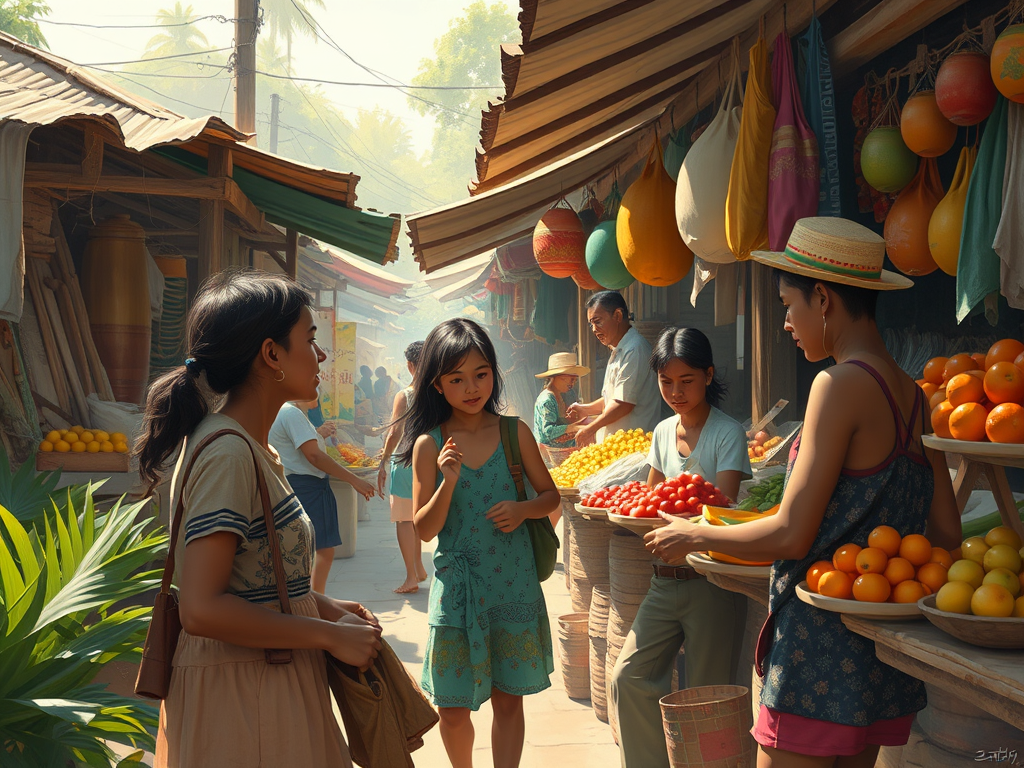
When you’re traveling through the world as a worldschooling family, economics isn’t just something you read in a textbook. It’s something you feel—in the price of a loaf of bread, the exchange rate at a border crossing, or the dusty stalls in a market where someone is selling handmade crafts for a price that wouldn’t buy you a coffee in Toronto.
The more you travel, the more the divide becomes obvious: some parts of the world are cheap, some are expensive. Some are stable, others seem locked in an endless struggle. And often, it’s the poorer, less stable countries that seem to have the most natural resources, the richest cultures, and the hardest-working people. So, what’s really going on?
Let’s break it down from a worldschooler’s point of view—starting with two ideas that sound simple but shape everything: scarcity and abundance.
Scarcity and Abundance: The Basics
In economics, scarcity means there’s not enough of something to meet demand. That could be food, fuel, land, jobs—anything people want or need.
Abundance means there’s more than enough to go around.
But here’s the trick: these aren’t always about physical reality. Scarcity is often manufactured. Abundance can be hidden.
In Senegal, you can buy a full grilled fish meal for the price of a soft drink in Canada.
In Pakistan, a haircut costs less than a bottle of shampoo in the U.S.
In Morocco, oranges fall off trees and are sold fresh-squeezed for pennies.
So why are some things cheap in some countries and expensive in others?
It’s Not About the Things—It’s About the System
When something is cheap in one place and expensive in another, it’s not because the people in the cheaper country don’t work hard. It’s because of how the global economic system has been designed.
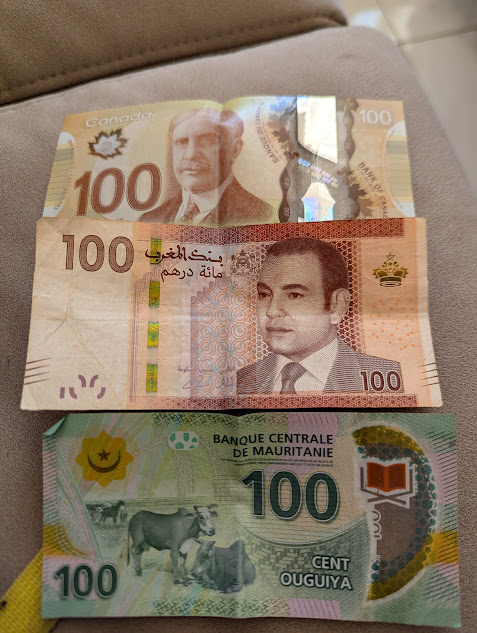
Take labour—in countries like Senegal, Pakistan, or Mauritania, people can work 12-hour days and still not earn what someone in Canada makes in a couple of hours. The global North (USA, Canada, Europe) benefits from this. Why? Because if the Global South were to rise, with strong wages, education, and infrastructure, the North wouldn’t be able to outsource production, import cheap goods, or keep control through debt.
The Global North Needs the Global South to Stay Unstable
That sounds harsh, but it’s true. The modern world economy is structured around the exploitation of low-wage economies for the benefit of high-wage economies. This isn’t about race or politics—this is straight economics.
Institutions like the IMF (International Monetary Fund) and the World Bank claim to help developing countries through “aid” and “development loans.” But these loans come with conditions:
- Privatize your water system
- Cut social spending
- Open your markets to foreign investment
- Pay back loans with interest
This keeps countries perpetually in debt, unable to build independent economies. They end up selling off resources, labour, and public assets just to pay interest. It’s like a payday loan for nations.
Meanwhile, the U.S. and Canada are drowning in debt themselves.
Why Are the U.S. and Canada in Debt?
Because they live beyond their means—but they can. Their currencies are considered strong, their governments are seen as stable, and most importantly—they control the narrative.
The U.S. dollar is the world’s reserve currency, which means it can just print more money without the same consequences other countries would face. Imagine being able to run up a credit card bill with no real plan to pay it back—because everyone else still trusts that you will, someday, somehow.
In the Global South? Print a little extra money and you get hyperinflation, IMF threats, and economic collapse.
Comparing Economies: What’s Cheap and What’s Not?
| Country | What’s Cheap? | What’s Expensive? | Why? |
|---|---|---|---|
| USA | Electronics, cars | Healthcare, education, labor | Strong dollar, high productivity, corporate lobbying |
| Canada | Groceries (compared to US), healthcare | Housing, childcare, fuel | Government subsidies, but high taxes and real estate inflation |
| Senegal | Street food, transport | Imported goods, electronics | Local production low, import duties high |
| Morocco | Fruit, local meals, hammams | Tech, cars, Western brands | Agriculture strong, industry still catching up |
| Pakistan | Labour, food, clothing | Energy, healthcare | Overpopulation, debt cycle, inflation |
| Mauritania | Fish, local crafts | Infrastructure, education | Resource rich, development poor, under foreign influence |
Why Is This Important for Worldschoolers to Understand?
Because if you don’t understand the real story behind money, you risk believing the myth that rich countries are rich because they work harder or are smarter. That’s not it. The wealth of the North has been built—historically and currently—on the back of the South.
Travel teaches you that poverty is not laziness and riches are not virtue. They’re often the result of location, history, and who controls the currency printer.
Worldschooling opens your eyes not just to cultures and languages but to the economic systems that shape how people live. It forces you to ask uncomfortable questions.
So What Now?
We live in a world where a child in Nouakchott eats with sand-covered hands and no shoes, while another in Vancouver refuses dinner because it’s not organic enough. One lives in scarcity, the other in abundance—but only because that’s how the system is set up.
As worldschoolers, we have the privilege of moving between these worlds. But what are we learning from them?
And more importantly—what are we doing with that knowledge?
Because at some point, the game of economic musical chairs stops.
And then the question isn’t just who’s sitting.
It’s: who designed the music, and who profits when it ends?
 Halai
Halai 
Leave a comment