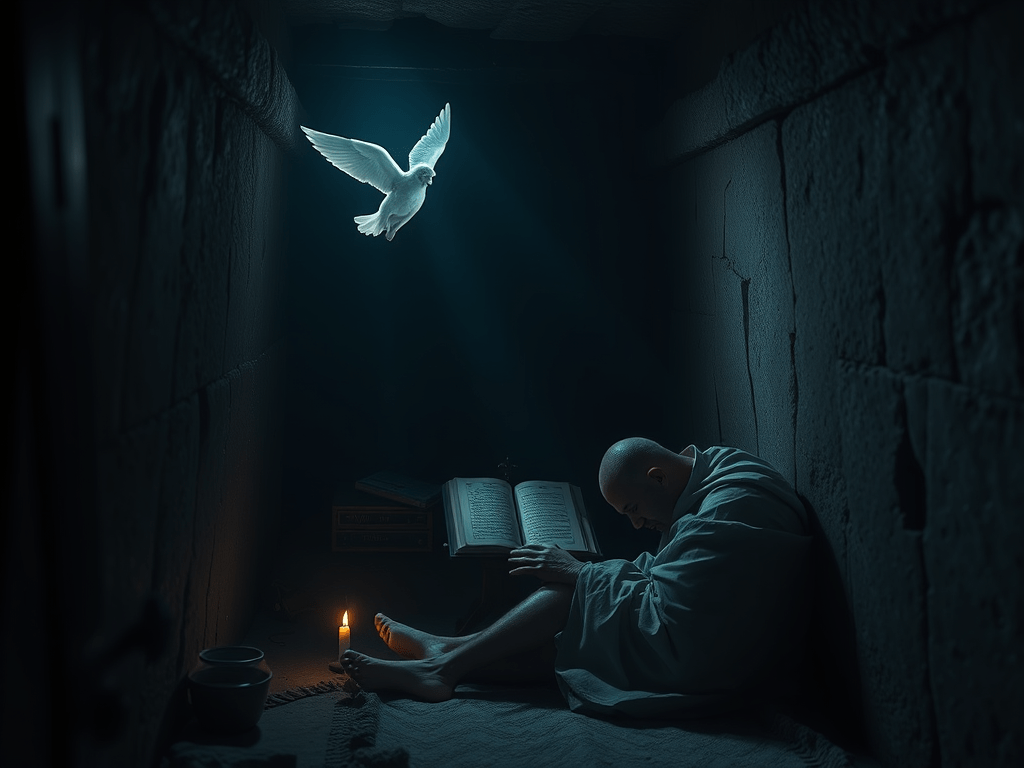
Tonight is the 23rd night of Ramadan. Maybe Laylatul Qadr. The Night of Decree. The night the Qur’an descended. A night of peace, power, and infinite mercy.
Inna anzalnahu fee laylatil qadr
We sent it down on the Night of Decree.
Better than a thousand months. Angels descend. The heavens open. Forgiveness is poured down like rain.
But today, just hours before this sacred night, I sat inside a punishment cell on Goree Island, just off the coast of Dakar.
The cell was small, dark, suffocating. Built not to detain, but to destroy. A space designed to crush spirit, silence rebellion, and erase identity.
I sat in silence, but my thoughts screamed.
Who were the people who built this?
Who filled it?
What kind of man does this to another man?
The guide said it plainly. Europeans. Mostly the French and Portuguese. Slave traders. Christians, officially.
But it wasn’t that simple.
Because they didn’t do it alone.
How the Slave Trade Worked
The transatlantic slave trade didn’t begin with Europeans marching into villages with shackles. It began with alliances. With incentives. With local intermediaries—neighboring tribes or rival groups—who captured men, women, and children and sold them for goods.
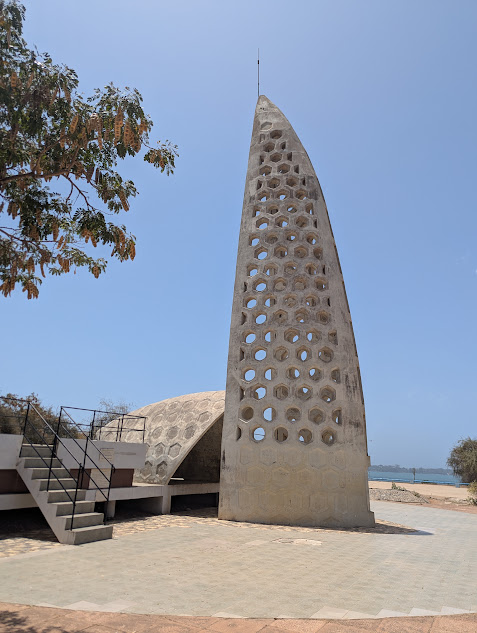
Slave Boat monument in Goree Island
Guns. Alcohol. Textiles. Status. Power.
Some of those groups became entire political entities, built on the trade of human lives.
What allows someone to become an “entity”?
Wealth. Access. Foreign backing.
Even if that wealth is built on bodies.
The system flourished not just because of greed, but because of silence. The silence of those who knew better and said nothing.
That silence still echoes.
The Contrast: Islam and the Enslaved
In that darkness, my thoughts turned to Bilal ibn Rabah. An African slave in Makkah. Tortured for believing in One God. Left on burning rocks with a boulder on his chest.
And yet, he became the first to call the Adhan in Medina.
Islam didn’t erase slavery overnight. But it transformed the narrative. It gave slaves dignity, rights, and a path to leadership. It made the freeing of slaves an act of worship.
Perhaps this is one reason Islam spread so rapidly in Africa. Because it offered something deeper than power—it offered dignity to the most crushed.
Laylatul Qadr wasn’t just a night of revelation. It was a reversal.
The Tyranny of Silence
There’s a prophetic saying:
Whoever sees evil must change it with their hand. If they cannot, then with their tongue. And if even that is not possible, then at least hate it in their heart—and that is the weakest form of faith.
Remaining silent in the face of tyranny is a form of participation.
History is filled with tyrants. But they are always outnumbered by those who stood by and did nothing.
And then there’s Hurr ibn Yazid.
The commander in Yazid’s army at Karbala. He had position, authority, and orders. But in the final hour, he switched sides.
He chose truth over comfort. Justice over allegiance. He saw he was standing with the oppressor and crossed the battlefield to die with the oppressed.
That’s the question tonight demands of us.
Which side are we on?
Am I Bilal, rising from slavery to call the world to prayer?
Or am I the one tightening the chains—maybe not with my hands, but with my silence?
Am I Hurr, willing to change even in the final hour?
Or am I just watching, thinking neutrality is safety?
Tonight, as the angels descend, may we not just seek forgiveness.
May we seek clarity.
And the courage to walk away from the wrong side, even if it’s late.
Because the Qur’an came down on this night.
And when light descends, chains are supposed to break.

 Halai
Halai 
Leave a comment