When we crossed from Tangier, Morocco to Senegal by road, I could feel the land changing—not just in its color and heat, but in its soul. The architecture shifted from cool stone riads to bold, colorful buildings. The food spiced up. The trees grew thicker, older, more sacred. Everything whispered: You’ve arrived in West Africa now.
And in Senegal, two national figures stand tall and proud: the Lion and the Baobab Tree.
—
The Mighty Baobab: Tree of Life
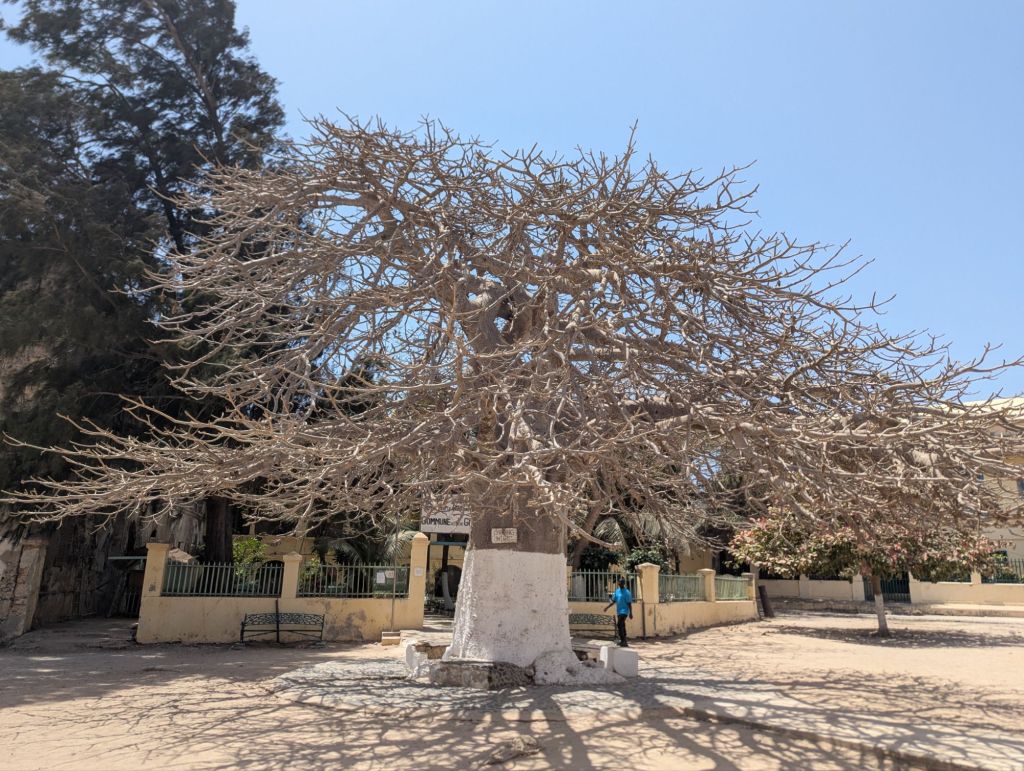
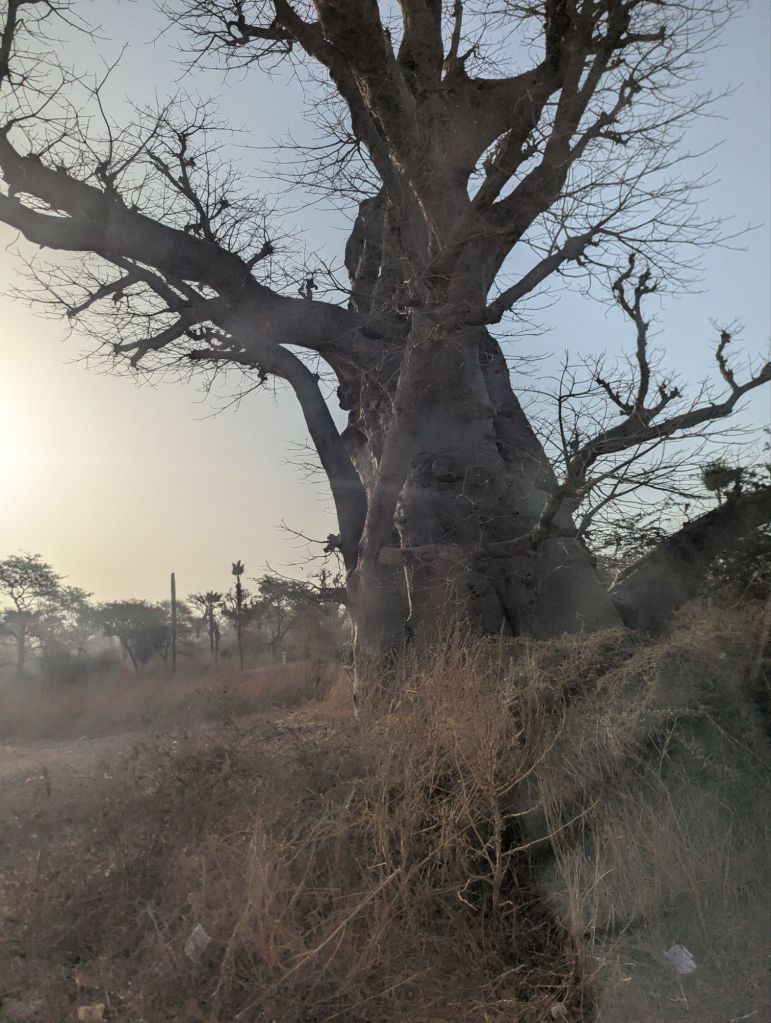
You can’t travel through Senegal and not notice the baobab. It’s like a wise old storyteller—thick trunk, giant limbs, often hollow but very much alive. In Wolof, it’s called géej. These trees have watched generations come and go.
Baobabs store water in their trunks to survive dry seasons, which is why they’re called the Tree of Life. I saw children playing in their shade, vendors resting under them, birds nesting in their branches. They aren’t just trees here—they’re part of the Senegalese identity.
And the fruit? Wow.
The baobab fruit, also known as bouye, has a hard shell and a tangy, dry pulp inside. Locals blend it with water and sugar to make a creamy, refreshing drink. My wife loved it. High in Vitamin C and antioxidants, it’s nature’s Gatorade—African style.
—
Hibiscus: The Flower That Became a Drink
Another plant you meet in Senegalese cuisine is the hibiscus flower, used to make a vibrant red drink called bissap. You might know it as agua de Jamaica in Mexico or zobo in Nigeria.
It’s sweet, tangy, and slightly floral—a cousin to cranberry juice. Served chilled, it’s a staple at gatherings, family dinners, and roadside cafés. Some even add mint or ginger for extra punch. Coming from Morocco, where atāy (mint tea) is king, bissap was a bold and welcome switch.
—
The Lion: National Symbol of Strength
The lion represents courage, strength, and leadership in Senegal. You’ll see it in art, on posters, and in stories. Senegal’s football team is even called the Lions of Teranga—with Teranga meaning hospitality, a value deeply woven into Senegalese culture.
And I felt that teranga everywhere—whether it was Bolo offering to help us find our way in Dakar, or an older woman insisting we try her homemade yassa.
—
From Tagine to Yassa: The Culinary Shift from Morocco to Senegal
Driving down through the desert, I watched the cuisine evolve like chapters in a book.
In Tangier, we had delicate couscous, flaky pastilla, and tagines slow-cooked with apricots and almonds. The flavors were subtle, sweet, spiced.
By the time we reached Nouakchott, Mauritania, the food grew simpler. More grilled fish, rice, and camel meat in some spots.
But in Senegal, it was like someone turned up the volume on flavor.
The food here is bold—onions, garlic, mustard, chili, and love.
—
The Glory of Yassa
I have to say it clearly: I absolutely loved yassa.
Yassa is a dish of chicken or fish marinated in lemon, mustard, and caramelized onions, then slow-cooked and served over rice. The first bite hits you with tang, then sweetness, then depth. It’s like a flavor rollercoaster, and I never wanted to get off.
Each family makes their version. Some add olives, others extra heat. Some use thiof—a local white fish that’s firm, flavorful, and found in coastal waters. It’s often grilled whole and served with mustardy sauces or in hearty stews like ceebu jen (Senegal’s national dish—rice and fish with veggies).
—
The Fish of Senegal
Senegal has a long Atlantic coastline, and fish is at the heart of the cuisine.
Thiof: A prized grouper-like fish, often grilled or stewed.
Sardinella: Used in many everyday meals and sauces.
Capitaine: A tender white fish often seen in upscale dishes.
Octopus and prawns also make appearances in coastal towns.
Walking through the fish markets in Saint-Louis or along the beaches of Dakar, I saw colorful wooden boats, fresh catches, and the daily rhythm of the sea feeding the people.
—
In the Shade of the Baobab
Sitting under a baobab one late afternoon, sipping bissap and eating grilled fish with yassa rice, I felt a deep peace. Nature, culture, and community all around.
Senegal isn’t just a stop on the map. It’s a lesson in how food, trees, animals, and people are all connected—how a tree can symbolize survival, how a dish can carry a country’s soul, and how teranga can turn strangers into friends.
—
Final Thought:
Whether you’re a worldschooling family or just dreaming of your next adventure, don’t overlook the wisdom of trees and taste. Travel with your senses open. Follow the scent of grilled yassa. Rest under a baobab. Sip a bissap slowly.
And remember: sometimes, the biggest lessons come from the smallest fruits.
– Asad, the Traveling Tree-Hugger and Yassa Lover
 Halai
Halai 
Leave a comment