“I have neither wit, nor words, nor worth,
Action, nor utterance, nor the power of speech,
To stir men’s blood: I only speak right on.”
— Julius Caesar (Shakespeare)
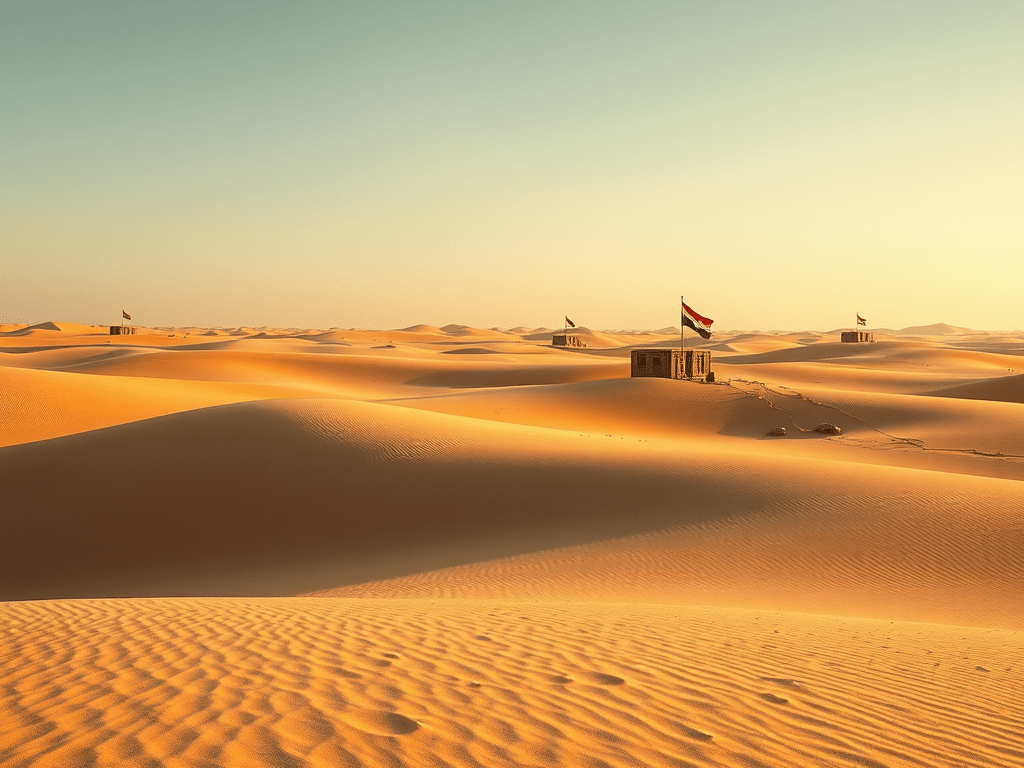
Traveling through Western Sahara, I found myself staring at a map that looked deceptively calm—border lines drawn with confidence, place names printed with certainty. But the land told a different story. Beneath the silence of the desert winds was an unease, a whisper of something unresolved. It hit me then: I was standing in the middle of an occupation. One the world has mostly chosen to forget.
This blog is not a scholarly essay or a political manifesto. Like Caesar’s friend (Mark Anthony) in the quote above, I claim no great eloquence. I only speak right on—about what I’ve seen, what I’ve felt, and what I believe we too often overlook.
Occupation vs. Colonization
We often use occupation and colonization interchangeably, but they are not the same.
Colonization is when a foreign power comes to settle and rule over indigenous people—often displacing them, extracting resources, and imposing their culture. It was the story of the British in India, the French in Algeria, the Spanish across Latin America.
Occupation, by contrast, is usually framed as temporary control—military or administrative—over a region. But in reality, many occupations outlast empires. They persist in the shadows, sometimes rebranded as development, security, or sovereignty.
What Is Occupation?
Occupation is power without consent. It’s presence without invitation. It’s when a land is governed by those who do not represent the will of its people. It often comes with soldiers, flags, checkpoints, fences, laws rewritten in another language.
But perhaps the most dangerous part of occupation is not the guns or the walls. It’s the silence that can follow. The normalization. The forgetting.
A Brief History of Occupation
From ancient empires to modern nation-states, occupation is as old as conquest itself. The Romans were expert occupiers, as were the Ottomans, the Mongols, the colonial powers of Europe. The goal was always similar: take control, reshape identity, extract value.
In more modern terms, we’ve seen occupations in:
- Algeria (by France)
- Korea (by Japan)
- Palestine (by Israel)
- Tibet (by China)
- Western Sahara (by Morocco)
Each case follows a pattern: move in, control the narrative, populate the land, displace the resistance.
The Blueprint of Occupation
To occupy effectively, a regime must do more than station troops. It must reshape the landscape:
- Demographics – Bring in your people. Offer land, incentives, homes. (Does investing in those lands however lucrative sound ethical?)
- Language and Law – Rewrite the legal system, rename the streets. (Abolish the literary of previous times)
- Infrastructure – Build roads, buildings, and checkpoints—but not for the locals’ freedom.
- Narrative Control – Convince the world it isn’t occupation. Call it unity, peace, or development. (How folks especially from the western world roam in these ‘surf towns’ in the Western Sahara).
But what happens when you run out of people to “fill in” the land? You offer more incentives. You silence dissent. You erase memory. You flood the silence with your own voice.
The World’s Favorite Occupation
No occupation gets more media attention than the Israeli occupation of Palestine—especially Gaza. The images from Gaza are raw, visceral, and bloody. The occupation has become a moral litmus test for the world. But why does Gaza dominate the headlines?
Because it’s the most visible occupation. Because it’s ongoing, violent, and wrapped in layers of religion, history, and politics. Because in Gaza, the occupation doesn’t whisper—it bleeds on live television.
Yet, the question remains: is it the only one?
Other Occupations We Don’t Talk About
- Western Sahara: Annexed by Morocco in 1975. The Sahrawi people continue to live in exile, in refugee camps in Algeria. (Who are they?)
- Kashmir: Claimed by both India and Pakistan, its people live under heavy militarization. (Millions have lost their lives)
- Tibet: Controlled by China, where expressions of Tibetan identity are suppressed.
- Crimea: Taken by Russia, despite international condemnation.
- Northern Cyprus: Occupied by Turkey since 1974, recognized only by Turkey.
All of these places echo the same story: a people whose voice has been dimmed. Not erased—but silenced in the global conversation.
Western Sahara: A Whisper in the Wind
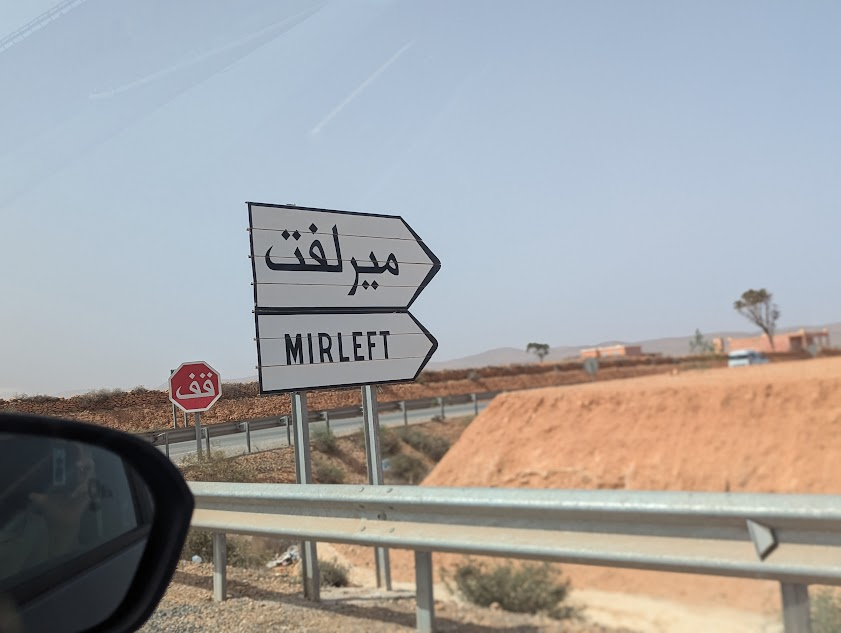
In the towns of Western Sahara, the buildings wear Moroccan flags like cloaks. The signs are in Arabic and French. The soldiers at the checkpoints don’t ask where you’re going—they already assume you know your place. And yet, in the eyes of the people, there’s a quiet defiance. A question still burning: Whose land is this, really? (Another blog this title exists on this site.. read for perspective)
This isn’t a battle fought on the evening news. It’s a slow erosion of identity. And the world watches—barely.
Why I’m Writing This
Because while the world argues over Gaza, other stories are buried beneath the sand. I’m not asking you to turn away from Palestine. I’m asking you to also look around. To see the full map. To hear the voices that don’t make it to our screens.
Because occupation is not just about land. It’s about dignity. About being seen.
“To deny people their human rights is to challenge their very humanity.”
— Nelson Mandela
 Halai
Halai 
Leave a comment