I stood outside the towering majesty of the Hassan II Mosque, the largest mosque in Africa, its minaret piercing the Casablanca skyline like a divine exclamation mark. This was Baitullah—the House of God. And yet, the gates were locked.
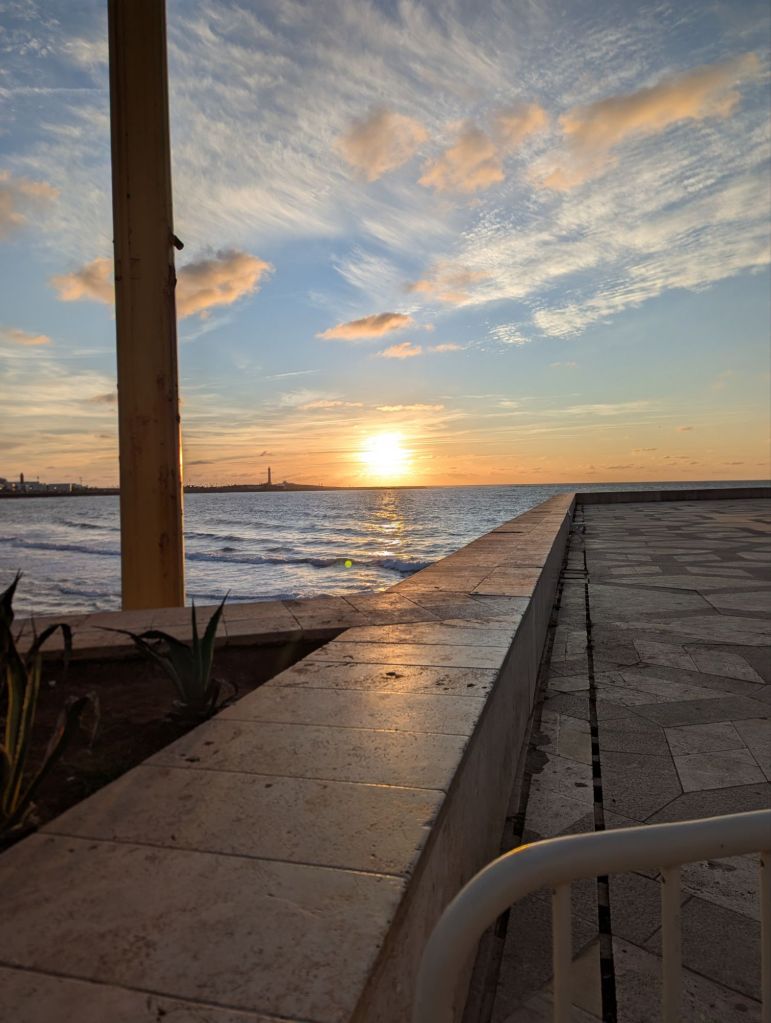
Closed to the public except for tightly scheduled prayer times, the house that should welcome all felt like a monument to exclusivity. Tourists with tickets could enter for a guided experience; ordinary Moroccans often stood outside its marble walls, looking in. It made me wonder: when did access to God start requiring a time slot and a payment?
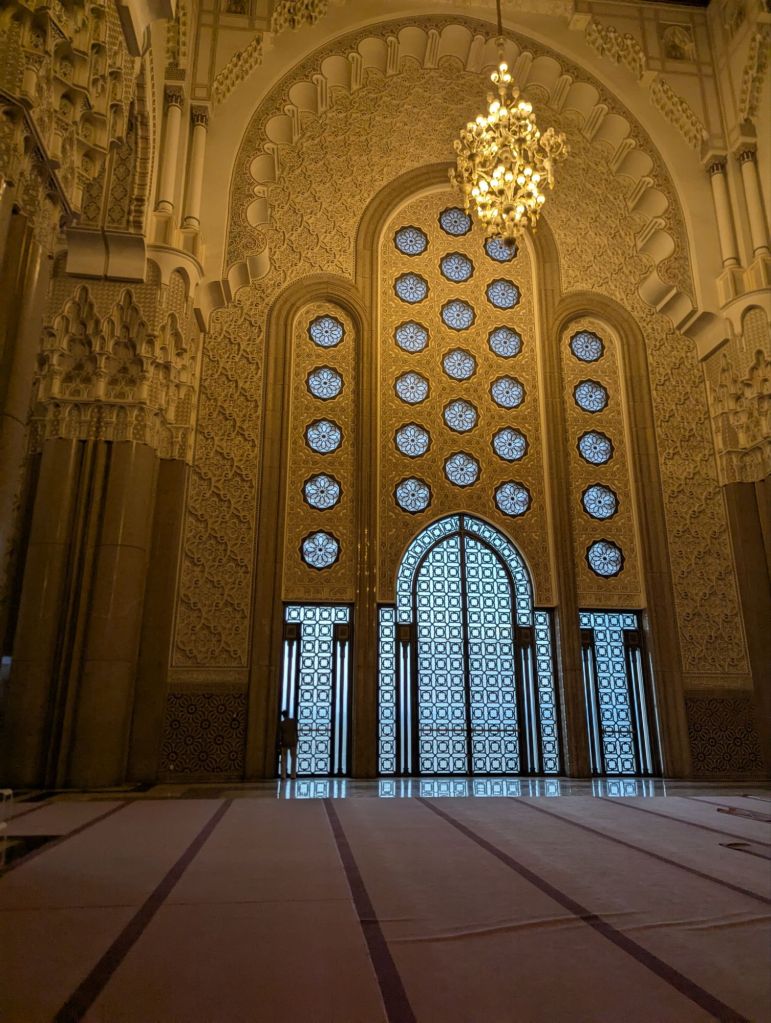
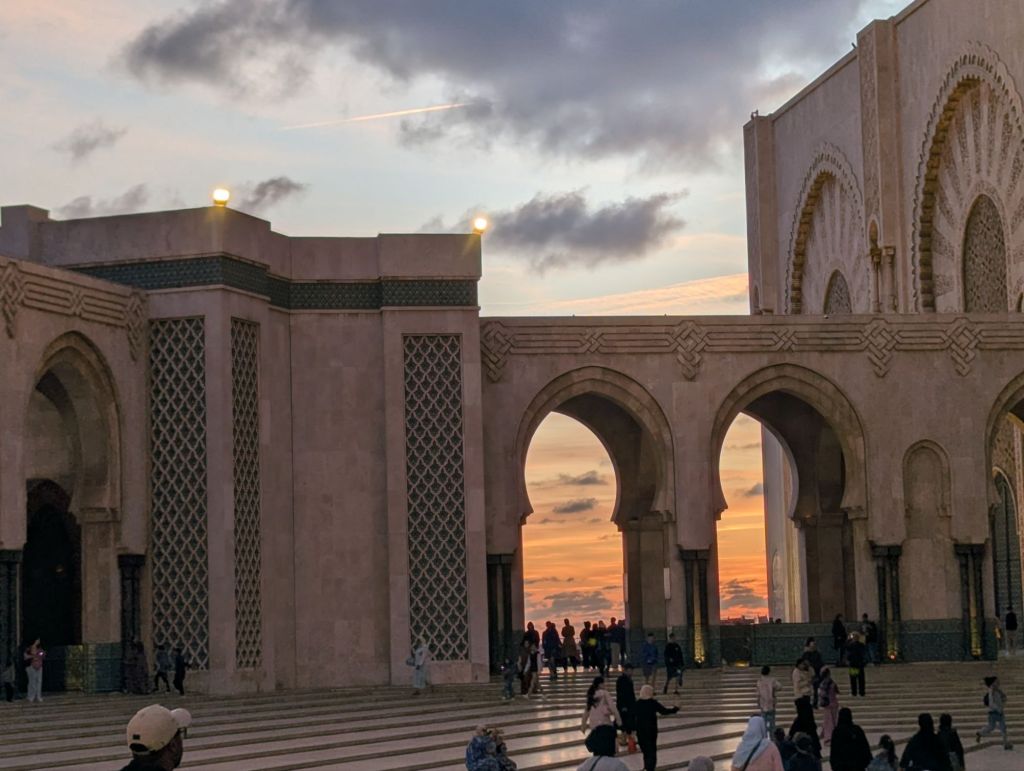
Right behind the polished gates and manicured gardens of the mosque, slums sprawl—concrete boxes stacked upon each other, laundry dangling from satellite dishes, barefoot children chasing time in dusty alleyways. The contrast between the mosque’s grandeur and the poverty at its feet is jarring, like a poem with mismatched lines.
I asked myself: What kind of devotion builds a house for God worth millions while leaving His people in cardboard homes?
Then came the police. Everywhere. Smiling as they handed out fines, tickets, and subtle warnings. Not the kind of force that made you feel safe—more like one that reminded you who’s in charge. The air felt policed, not protected. Every checkpoint a symbol that power often watches, but rarely serves.
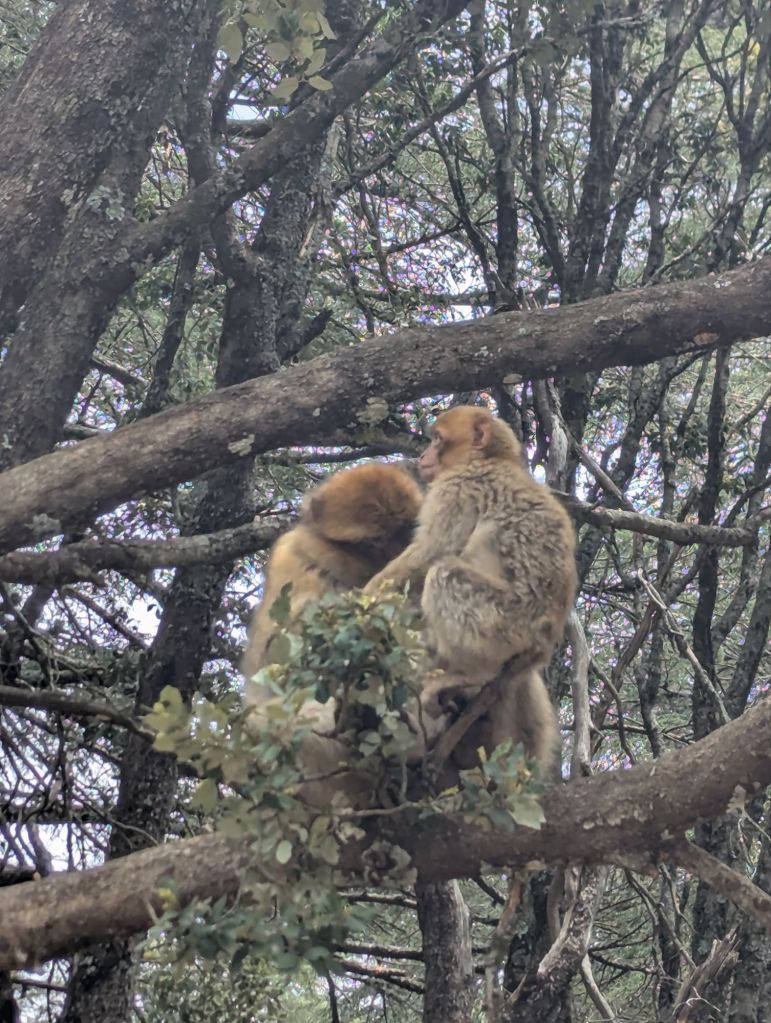
Later, in the forests of Azrou, I met the monkeys—Barbary macaques, bold and wise in their own way. I laughed to myself: in a world led by corrupt politicians and broken promises, these monkeys might just do a better job running it. They protect their young, don’t hoard resources, and live within the bounds of their ecosystem. What if leadership followed nature’s blueprint?
As my thoughts wandered deeper, so did my journey—to Fez, to the ancient University of al-Qarawiyyin. Founded by a woman, Fatima al-Fihri, in the year 859, it stands as the oldest continually operating university in the world. Before Oxford. Before Cambridge. Long before the West “discovered” reason, logic, and medicine.
What was taught in those rooms? Quran, law, astronomy, mathematics, grammar, and medicine. Philosophers and scientists once debated under those arches—open to both the sky and new ideas. History often forgets that the roots of modern knowledge stretch deep into North African soil, watered by Muslim, Jewish, and Amazigh hands alike.
But where is that spirit now?
When the Arabs came to Morocco in the 7th century, it wasn’t just a spiritual arrival—it was a political one. Resistance by the indigenous Amazigh people was fierce. The conquest, like most in history, was not clean. It was part sword, part sermon. Over time, Islam became woven into Moroccan identity—but let’s not whitewash the blood that soaked that fabric. Empire, whether Arab or European, rarely comes without wounds.
Morocco today is full of contradictions—beauty wrapped in bureaucracy, history overshadowed by hierarchy. But that’s what makes it real.
And so, I left the gates of the mosque not just with questions about Morocco, but about the world. Who gets access to beauty? Who decides who enters the house of God? Why do we build monuments to worship, while ignoring the suffering of those made in God’s image?
Sometimes, a walk through a city is also a walk through your own conscience.
 Halai
Halai 
Leave a comment