There’s something almost mythical about Granada — a city cradled between snow-capped mountains and sunlit orchards, where history flows like the ancient acequias that still carry water into its heart. And at the crown of it all stands the Alhambra, a fortress-palace so poetic it feels less like architecture and more like a whispered memory.
But what does Alhambra mean, and why does it echo names from other places—like the BBQ joint from my childhood called Alhamra, or the forts of Baltistan with their stacked rooms, airy terraces, and views into eternity?
What’s in a Name: Alhambra & Alhamra
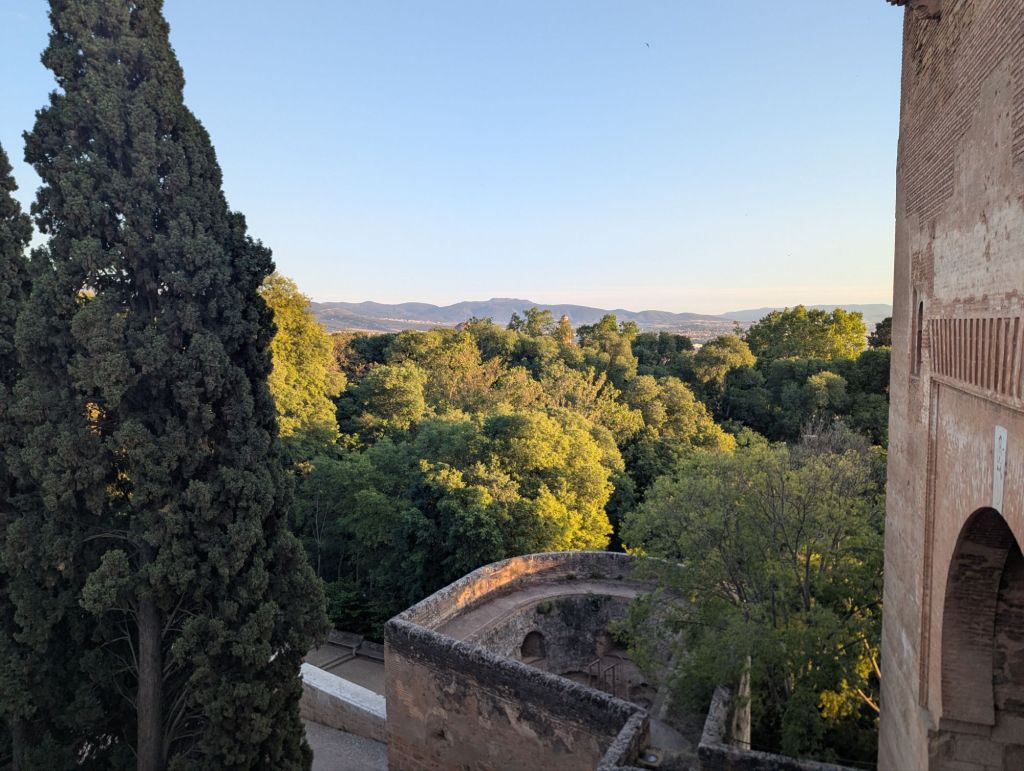
The name Alhambra (from the Arabic al-Ḥamrā’) means “The Red One,” likely due to the reddish hue of the stone walls that blaze like fire at sunset. In Urdu, Alhamra is often used as a poetic term too—meaning something like “the red fortress” or “the glowing palace.” That BBQ restaurant? It probably borrowed the name because Alhamra rolls off the tongue like a taste you didn’t know you remembered.
And here I am now, walking those same red walls in Granada.
The Water Story: Acequias and Paradise Engineering
Granada is a city born of water management genius. The Muslims who ruled Al-Andalus didn’t just conquer — they channeled water from the Sierra Nevada mountains through a system of aqueducts and acequias that irrigated gardens, homes, baths, and fountains. The very idea of paradise in Islamic culture is tied to flowing water and shade — and so the Alhambra was crafted to be paradise on Earth.
Stand in the Generalife Gardens, and you’ll hear it: water dancing over stone, whispering down narrow channels. It’s more than just irrigation. It’s a philosophy — harmony with nature, not domination over it.
Like Baltistan in Spain
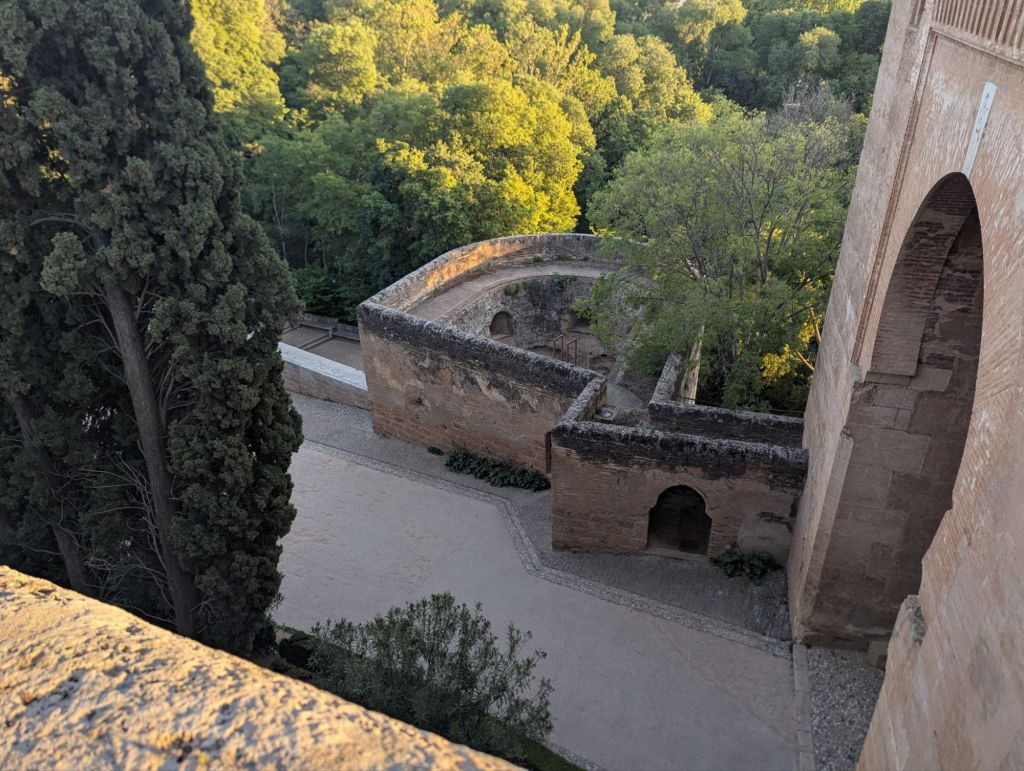
The first time I walked through the Alhambra’s halls, I was struck by how much it reminded me of the forts in Shigar and Hunza. Multi-roomed structures that respect the landscape, not fight it. Balconies that drink in the sky. Wood-carved details. The symmetry of thought and shelter. Were they born from the same ancient architectural instincts — or is it simply that beauty speaks the same language across cultures?
A Fortress, Then a Castle, Then a Symbol
After the Reconquista in 1492, the Catholic Monarchs took over the Alhambra. And like so many victors, they planted their flag inside the conquered temple. Enter Charles V, the Holy Roman Emperor — who found this poetic marvel and decided to build a hideous Renaissance palace right in the middle of it.
It’s still there today — circular, heavy, and almost offensive in its indifference to the delicacy around it. What were the French and others doing here? Looting, occupying, rewriting history. As they did across the world.
How Many Rooms Does Alhambra Have?
Nobody knows exactly. But it’s estimated the Alhambra complex includes over 150 rooms, each with its own relationship to light, air, and silence. They weren’t just rooms. They were ideas carved into stone — mathematics turned into mosaics, and theology turned into geometry.
Did Europe Learn From Islam in Spain?
Oh yes. The Muslim empire ruled Al-Andalus for over 780 years, and during that time, Europe absorbed:
- Medicine from Arabic texts
- Astronomy from Muslim observatories
- Philosophy from Ibn Rushd and Al-Ghazali
- Mathematics (Algebra from al-jabr, algorithms from al-Khwarizmi)
- Architecture that inspired the Gothic cathedrals that came later
- Even the idea of public libraries and academic tolerance
The Alhambra was less a palace and more a university of the soul.
The Gardens and the Echo
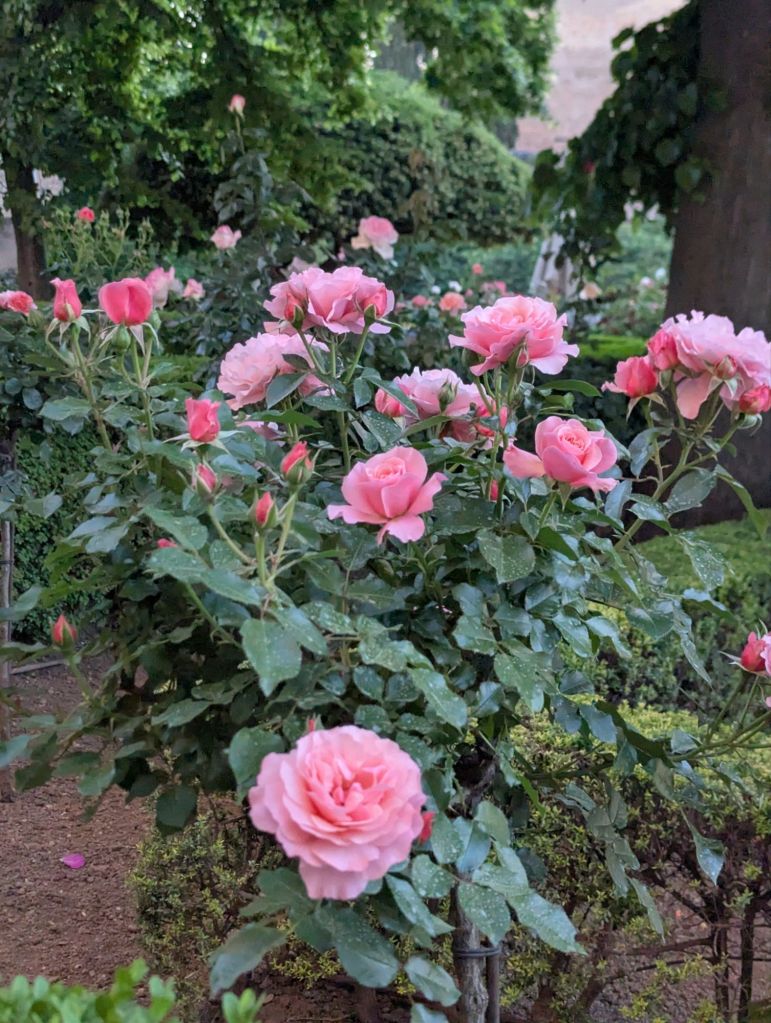
The gardens were meant to smell of orange blossoms and mint, to sound like laughter and poetry. They were not an afterthought — they were the center of the experience, just like in the chahar bagh gardens of Persia or the courtyards of old Lahore.
And maybe that’s why when I hear Alhamra, I don’t just think of Granada or red stone. I think of that restaurant, of simpler times, of the way a name follows you across time and space, resurfacing when you least expect it.
Just like memory. Just like water.
“Yeh jo waqt hai, is mein sab kuch dobara milta hai. Kabhi ek naam ke zariye, kabhi ek maqam ke.”
(“Time gives us everything again — sometimes through a name, sometimes through a place.”)
 Halai
Halai 
Leave a comment