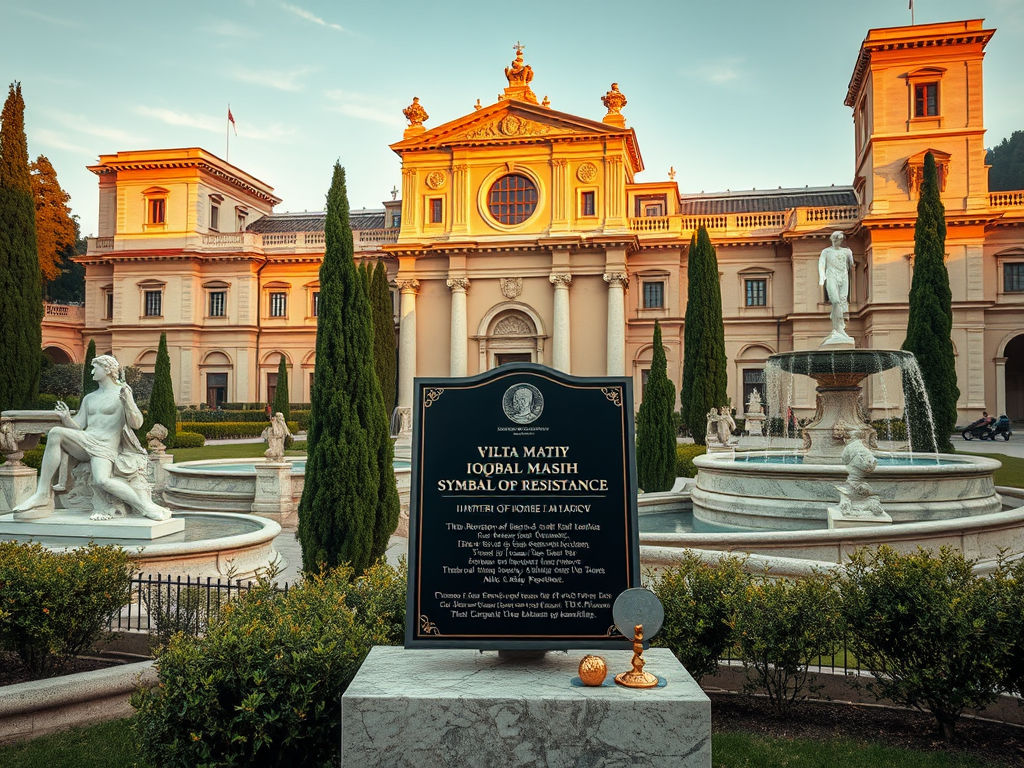
There’s a villa in Tivoli, just outside Rome, where fountains still dance in precise harmony, and cypress trees line the sky like a hymn. Villa d’Este, they call it—a jewel of the Renaissance. But behind its marble, there’s a quieter, bloodier story.
It was built by Cardinal Ippolito II d’Este, a man denied the papacy but desperate for power. So he built himself a paradise. Ruins from ancient Rome were stripped, entire water channels redirected, labor pulled from peasants, and Church funds—meant for the poor—repurposed for personal glory. This, they say, was the golden age of art and civilization.
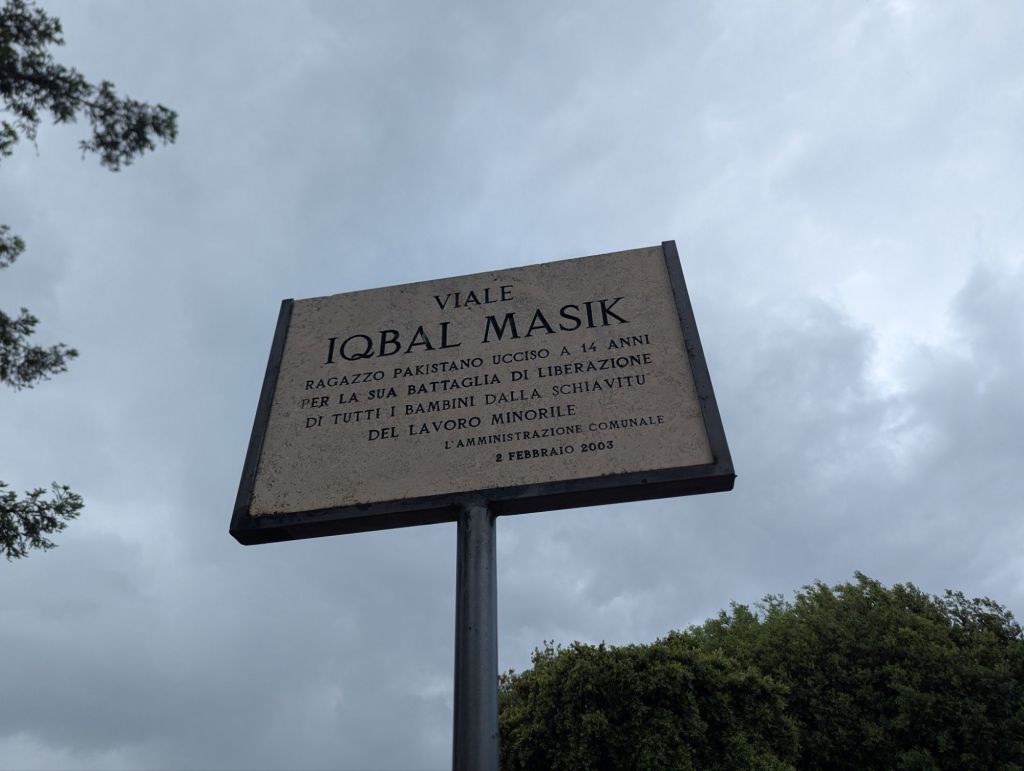
But just a few steps from that opulent legacy, in modern Tivoli, I saw something that stopped me: a marker dedicated to Iqbal Masih, the Pakistani child who escaped slavery in a carpet factory and became a global symbol of resistance.
How strange.
Why is it that Iqbal Masih has become a Western icon, just like Malala Yousafzai—elevated as the voice of women’s rights and education? What machinery selects these individuals, shapes their stories, and projects them onto the world stage? Is it because they speak truths the West is comfortable hearing, truths that reinforce the West’s savior narrative?
Iqbal’s story is real. His suffering undeniable. But his legacy now feels… curated. Plucked from the soil of Pakistan, stripped of its political context, and rebranded as a symbol of Western virtue. The same West that built its fortunes through centuries of slavery, colonization, and conquest—the same West that turned looted wealth into art, literature, and gardens like those at Villa d’Este—now dares to lecture the world on human rights.
This is not about denying the bravery of Iqbal or Malala. It’s about asking:
Who gets chosen? Who gets silenced? And why are these stories told in polished granite at the edge of a Renaissance palace built on stolen labor?
In the palaces of Rome and the press rooms of New York, the story is told with a soft voice: “We care. We listen. We remember.”
But in the streets of Karachi, Lahore, or Gujrawala, children still sew carpets and beg outside army-built plazas while Pakistani elites stash public money in London and Dubai. Are these the new Renaissance men? Or just a different breed of leech?
The truth is:
The Renaissance never ended. It just changed locations. The marble is still being polished—only the hands behind it remain invisible.
 Halai
Halai 
Leave a comment