We’re currently living about 30 minutes from Rome, and yesterday, I stood before the Colosseum—one of the most famous landmarks in the world. The experience was eye-opening.
Thousands of people were lined up to see it, and it was a free entry day. That got me wondering: how many people actually visit the Colosseum every year? (Fact check: Over 7.6 million people visited the Colosseum in 2023, making it one of the most visited monuments in the world.)
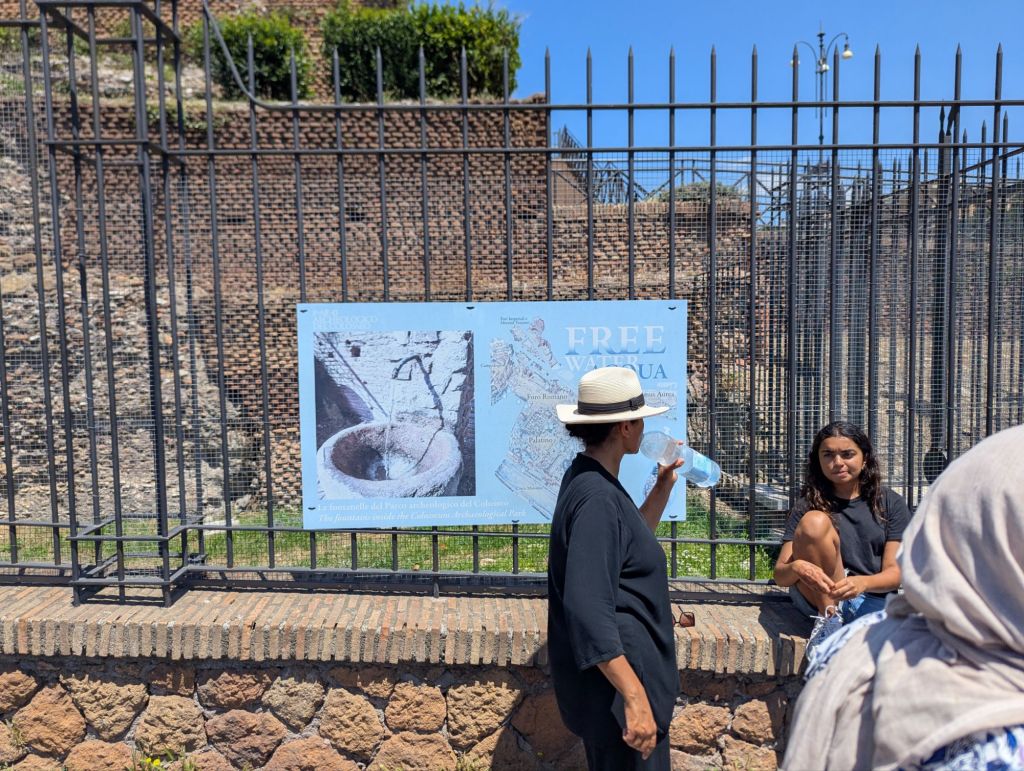
But I couldn’t help but ask—why are people still so drawn to this place? Yes, it’s historic, yes, it’s monumental. But architecturally, the Colosseum is quite simple—arches, pillars, stone, and concrete. It’s not ornate in the way cathedrals or mosques are. So is it just the brutality that draws us?
Because let’s not forget: the Colosseum was a place where people watched other people die. Gladiators—often slaves, prisoners, or criminals—were forced to fight to the death for entertainment. These games began around 264 BCE, during the early Roman Republic, and grew into a spectacle under the Roman Empire, especially under emperors like Titus and Commodus.
The Roman elite watched with grapes in one hand and wine in the other. Yet they labeled everyone else—Germans, Africans, Gauls—as “barbarians.” But honestly, who’s more barbaric: the one fighting to survive, or the one cheering from the stands?
I also couldn’t help noticing the contrast between ancient innovation and today’s reality. Roman aqueducts were engineering marvels—they brought clean water from faraway mountains to public fountains across the city. The Aqua Appia, Rome’s first aqueduct, was constructed as early as 312 BCE. And still today, fountains like La Fontana dell’Acqua Paola gush out cold, clean, fresh water.
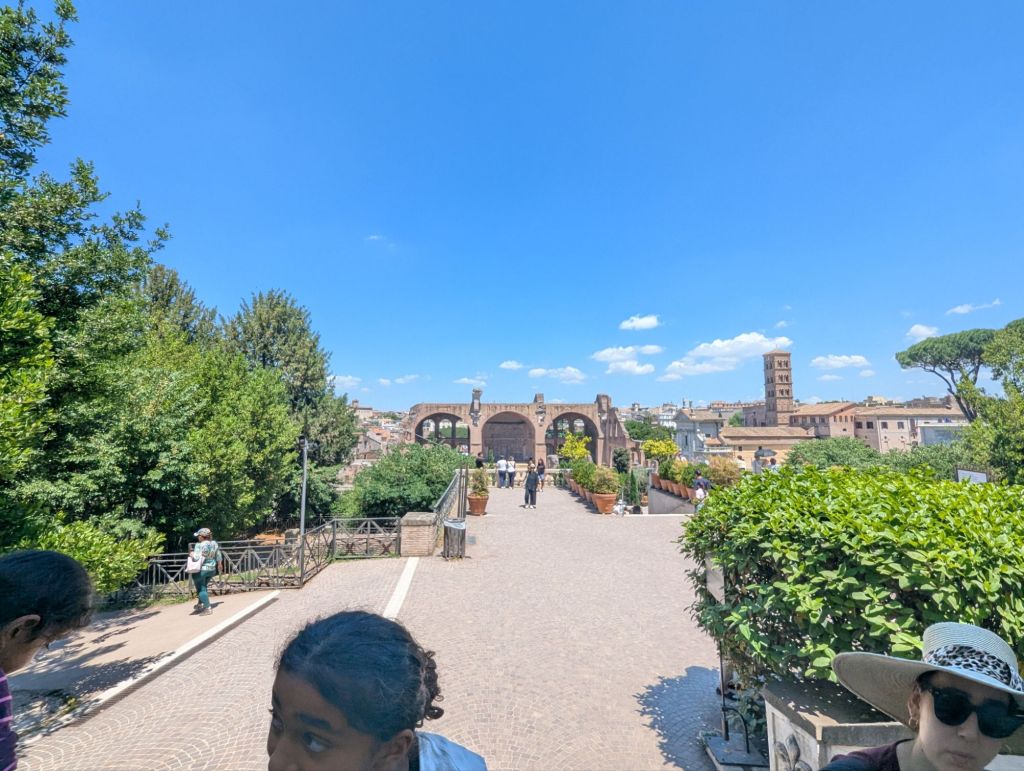
Yet ironically, we can’t drink this water where we live—just 30 minutes away. So we keep buying plastic bottles, adding to waste and recycling. What happened? Did Rome’s innovation stop at the aqueduct? Has Italy stalled in some ways?
That led me to explore Italy’s broader story. Today is Republic Day in Italy—June 2nd—marking the 1946 referendum when Italians voted to abolish the monarchy and become a republic after World War II. It’s a day of parades, flyovers, and national pride. But it also made me wonder—what is Italy’s place in the world today?
Italy is a member of NATO and the EU, and yes, it has a military. But unlike the empire it once was, modern Italy leans more on diplomacy and heritage than dominance. Maybe that’s a good thing.
Last night, I rewatched Gladiator. Yes, it’s fictionalized—but it gave me a strange sense of déjà vu. Power, betrayal, spectacle—it could be any country today. I mean, look at the U.S.—Donald Trump, whether you love or loathe him, was a disruptor. And disruptors, like Commodus in Gladiator or Caesar before him, always make history… even if not for the right reasons.
I’m not American, and I don’t care much about Democrats or Republicans. But it’s interesting to see how quickly society turns against anyone who breaks the norm. It’s like we demand change but crucify the changer.
Which brings me full circle to that old saying:
“Rome wasn’t built in a day.”
It’s true. Rome’s rise took centuries—through kings, republics, emperors, and collapse. The phrase is said to have originated in France in the 1100s (“Rome ne s’est pas faite en un jour”) before being translated into English. It reminds us that great things—empires, ideas, even revolutions—take time.
And yet… somehow all roads still lead to Rome. Why is that? Is it because Rome was once the center of the known world? The Roman road network spanned over 250,000 miles, designed to lead travelers back to the capital. That’s not just geography. That’s legacy.
So maybe Rome wasn’t built in a day.
But it certainly left a mark for the ages.
 Halai
Halai 
Leave a comment